What You Need to Know
- Dehydration concentrates what is already there: If the fruit is underripe, its bitterness concentrates. If its aroma is flat before drying, it will be flat in the pouch. Selection is not a preference; it is the first technical step in shelf life and quality.
- Ripeness is measured by sugar-acid balance (Brix): Citrus at peak Brix has a more rounded aroma and richer color, both of which are preserved and concentrated by the drying process rather than lost.
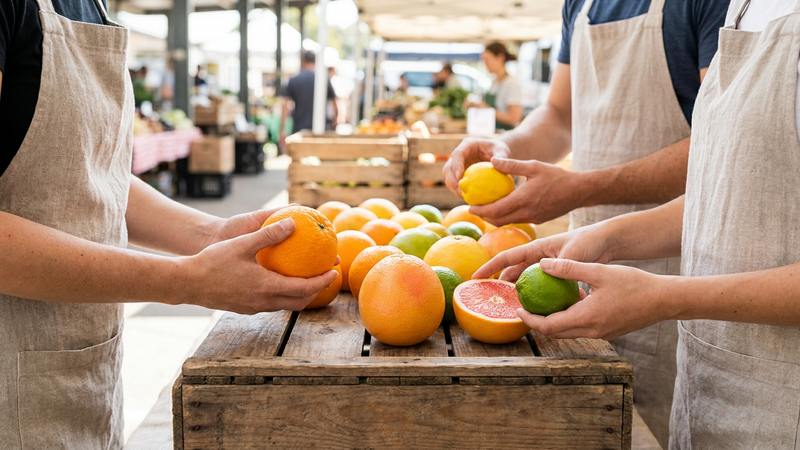
- Five checks on every piece of fruit: Color uniformity across the full rind, consistent rind thickness, clean and strong aroma, correct size range for the variety, and no surface damage or soft spots. All five must pass.
- The aroma check evaluates specific compounds: The monoterpenes being assessed, primarily limonene in lemons and limes and linalool and citral in oranges, are the same compounds preserved and concentrated by the low-temperature drying process. A flat aroma at selection means a flat aroma in the finished garnish.
- Rejection rates are significant: Fruit that looks correct but fails the aroma or rind uniformity check is turned away. Every slice in a Citrus House pouch passed all five checks before the dehydrator was turned on.
How We Select Fruit: What We Look For Before a Single Slice Is Dried
The selection standard is also what makes a preservative-free, additive-free 12-month shelf life possible—starting with compromised fruit means the drying process cannot compensate, and the shelf life suffers accordingly.
The quality of a dehydrated citrus garnish is decided before the dehydrator is ever turned on.
It is decided at the point of selection when someone holds a piece of fruit and makes a judgment about whether it is worth drying. That judgment, made correctly, is the difference between a garnish that looks extraordinary in the glass and one that merely looks dried.
Here is exactly what we look for.
It starts with ripeness—and ripeness is precise.
The measurement we use is the sugar-acid balance — the ratio of natural sugars (measured by Brix) to titratable acidity. Citrus at peak Brix has a richer, more rounded aroma that concentrates beautifully during drying. Underripe fruit has a high acid-to-sugar ratio; the bitterness amplifies rather than mellows.
Dehydrating citrus concentrates everything. That is the point. The flavor intensifies. The color deepens. The aroma becomes more concentrated. The oils in the rind become more present.
This means that if the fruit is even slightly underripe, the bitterness concentrates. If it is overripe, the color turns. If it is past peak, the aroma is flat before you even begin.
We select citrus at the specific window of peak ripeness when the sugar-acid balance is exactly right, the rind is fully colored, and the essential oils are at their most present. That window is narrow. We do not buy fruit speculatively and store it. We select it for drying, and we dry it.
|
Peak ripeness is not a moment you can recover from if you miss it. The fruit tells you when it’s ready. We listen. |
What We Look at on Every Piece of Fruit
Colour uniformity
A dehydrated citrus slice is a visual product. It is going to sit on the rim of a glass and be the first thing someone notices about the drink. Color uniformity matters. We look for fruit with consistent, deep color across the entire rind: no green patches on citrus that should be fully yellow, no pale sections on what should be a deep orange.
Rind thickness
Rind thickness also directly affects drying time; thicker rinds require longer cycles at the same temperature setting to reach the target water activity level. Consistency in rind thickness across a batch means every slice reaches the stability threshold at the same time, which matters for batch uniformity.
The rind is what gives a dehydrated citrus wheel its structure. Too thin and the slice becomes fragile and loses its shape during drying. It's too thick, and the drying process takes longer, and the balance between rind and flesh changes. We look for fruit with a rind thickness that will produce a slice that holds its shape on a glass rim for the duration of a drink.
Aroma
The aroma compounds we are evaluating are primarily monoterpenes: limonene (dominant in lemon and lime); navel oranges carry a broader mix, including linalool and citral; and grapefruit has a distinctive mercaptan-influenced profile. A flat aroma at selection means those volatile compounds are already degraded; nothing in the drying process can restore them.
Fresh citrus should smell like citrus. This sounds obvious. But fruit that has been stored too long, transported in poor conditions, or simply ripened unevenly often has a flat aroma even when it looks correct. We smell every batch. A piece of citrus that does not have a strong, clean aroma when you hold it to your nose will not produce a garnish that still smells like fresh citrus when you open the pouch six months later.
The aroma in the dried slice is the concentrated version of the aroma in the fresh fruit. Start with a flat fruit, and you end with a flat garnish.
Seasonal Windows and Variety Sourcing
Each citrus variety has a peak harvest season: navel oranges peak December through April, Meyer lemons are most abundant October through May, limes are available year-round but peak in quality during summer harvest windows, and grapefruit peaks December through April in the northern hemisphere. We select fruit within the peak window of each variety to ensure the aromatic and color quality that drying concentrates is there to begin with.
Size and shape
Each citrus variety has a natural size range that produces the best wheel when sliced. It's too small, and the garnish looks insubstantial on a standard coupe or rocks glass. Too large and it overwhelms the drink or cannot be placed cleanly on the rim. We select fruit within the size range that produces a slice with the right visual weight for a finished cocktail.
What We Reject and Why It Matters
Understanding what we do not use is as important as understanding what we do. Fruit with soft spots is rejected immediately; those areas will not dehydrate evenly and will leave inconsistencies in the finished slice. Fruit with any mold or surface damage is rejected. Fruit that looks right but does not smell right is rejected.
This is not a small percentage of rejection. Proper selection means being willing to pass on fruit that does not meet the standard, even when the volume needs to be made up elsewhere. A garnish that leaves the Citrus House pouch has passed every one of these checks. That is what the 12-month shelf life depends on: not just the drying process, but starting with fruit that was worth drying in the first place.
|
We reject more fruit than most people expect. The ones that make it through are the ones that earn their place in the pouch. |
Why This Shows Up in Your Glass
A dehydrated citrus garnish made from properly selected fruit at peak ripeness still smells like fresh citrus when you open the pouch. It holds a deep, consistent color. It releases its essential oils slowly as it sits in the drink, adding aroma throughout the experience rather than just at first contact. It holds its shape on the rim of a glass for the entire drink without wilting, browning, or losing its structure.
All of that starts with the selection. The dehydration process preserves what the fruit already is. It cannot create quality that was never there.
Shop dehydrated and dried citrus garnishes
|
Every Citrus House dehydrated citrus garnish starts with fruit selected at peak ripeness. Shop the range at citrushousecraft.com from $16 per pouch, 12+ month shelf life. |