What you need to know
Four elements define professional presentation: the glass, the ice, the pour, and the garnish—get all four right and the drink looks like it came from a proper cocktail bar.
The glass sets expectations before the first sip: serving the right drink in the right glass communicates quality instantly—the wrong glass undermines everything else.
Ice is the most underestimated detail in the home bar: large, clear ice melts slower, dilutes less, and looks significantly better than small cloudy cubes.
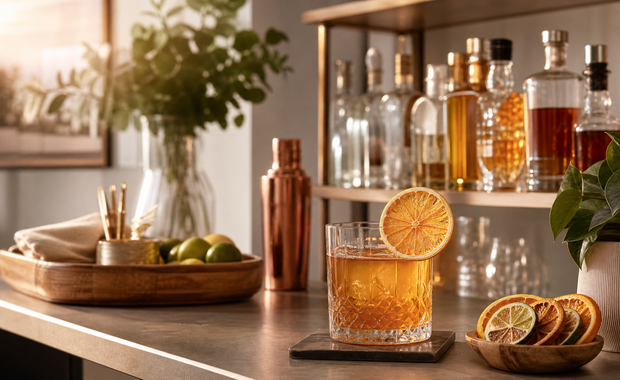
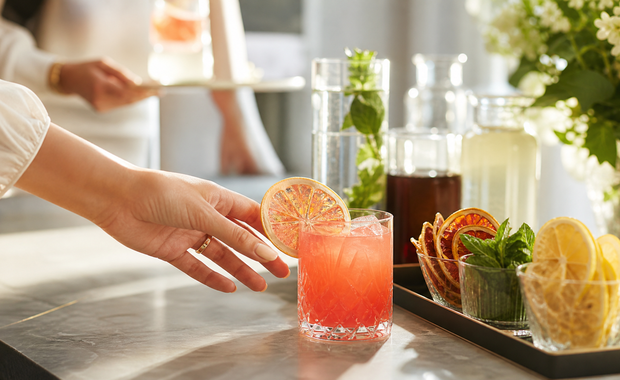
The garnish is the highest-impact, lowest-effort upgrade available: A dehydrated citrus wheel requires no prep, no planning, and no skill — and it changes how the drink looks immediately.
The garnish is what the camera sees first: it goes on last and comes off first in every photograph—make it the one element you never have to think about on the night.
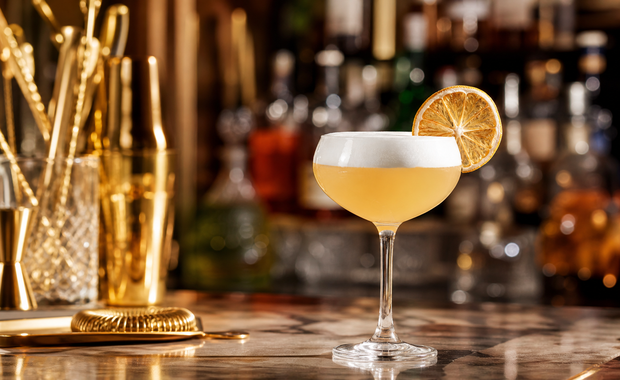
A whiskey sour made at home with quality ingredients, the right technique, and no garnish is a good drink. The same Whiskey Sour in a chilled coupe glass with a dehydrated lemon wheel floating on the foam is a $22 cocktail.
The liquid is identical. The presentation is everything.
This is not a secret that bars keep from home bartenders. It is just a set of decisions — about glass, ice, pour, and garnish — that most people making drinks at home have never been shown. Here is all of it.
Element One: The Glass
The glass is the first signal. A margarita in a rocks glass says home. The same Margarita in a chilled coupe is considered. A whiskey sour in a highball says "impromptu." In a rocks glass with one large ice cube, it says intentional.
You do not need many glasses. A coupe for shaken cocktails served up, a rocks glass for spirit-forward drinks over ice, and a highball for long drinks. Those three cover 90% of home cocktail occasions. What matters more than variety is that the glass is the right shape for the drink—and that it is cold.
Put glasses in the freezer fifteen minutes before serving. A frosted coupe placed in front of a guest before you pour communicates that someone in this house knows what they are doing. It is a thirty-second decision that costs nothing and changes everything.
|
A frosted glass placed in front of a guest before you pour tells them — before a single drop touches their lips — that this drink was made with intention. |
Element Two: The Ice
Bar ice and home ice are not the same thing. Standard freezer ice is small, cloudy, and melts fast. It dilutes the drink quickly and looks like an afterthought in a glass.
A single large ice sphere or cube in a rocks glass does three things that small ice cannot: it melts slower (less surface area), it looks deliberate (it fills the glass with intention), and it photographs completely differently.
Silicone ice ball molds or large cube trays cost under $15 and produce ice that makes every spirit-forward drink look like it came from a serious bar. This is the most underestimated upgrade in home cocktail presentation.
For shaken drinks served up in a coupe—Daiquiris, Gimlets, Whiskey Sours—there is no ice in the final glass, so this is less important. For anything on the rocks, it matters considerably.
Element Three: The Pour
Measure your cocktails. This is the least romantic piece of advice in mixology and the most effective. A jigger costs $8 and produces a consistently balanced drink every time. Without one, the same recipe made twice on the same evening will taste different, and your guests will notice even if they cannot say why.
The technique around the pour matters too. Strain slowly into the glass. Do not pour too high. For sparkling components, pour down the inside of the glass rather than directly onto the drink. These are small habits that collectively produce a drink that looks like it was made carefully—because it was.
Element Four: The Garnish — Where Most Home Bartenders Fall Short
The garnish is the last thing added to a cocktail and the first thing a guest sees. It is also the element where the gap between a home drink and a bar drink is most visible — and most easily closed.
Fresh citrus garnishes prepared at home present two consistent problems: they take time to prepare, and they degrade quickly. A fresh lime wheel cut before a dinner party has started to lose its edge by the time the second round arrives. It browns. It dries out. It slides off a cup rim. It falls into a highball glass.
A Citrus House dehydrated lemon, lime, orange, or grapefruit slice solves all of this at once. It looks more beautiful than fresh citrus on a finished drink—the golden translucence of a dried lemon wheel on Whiskey Sour foam is genuinely one of the most visually arresting things in cocktail presentation. It requires no preparation. It holds its position on the rim or the surface of the drink for the entire glass. And it is there in the cabinet whenever you need it, for the next twelve months.
|
The garnish is what the photograph shows. It is what the guest reaches for before they sip. It is the detail that tells them someone cared. Make it the one element you never compromise on. |
Putting It Together: The $22 Drink at Home
Cold glass from the freezer. A large ice cube in the rocks glass or no ice in the coupe. Measured ingredients, shaken or stirred correctly. Strained slowly. Dehydrated citrus garnish placed last.
That is the complete formula. Nothing on that list requires professional training. Everything on that list is a decision that any home bartender can make before the first guest arrives.
|
Shop Citrus House's dehydrated and dried citrus garnishes—the highest-impact, lowest-effort upgrade for any home bar. From $16 per pouch. citrushousecraft.com |