The Appletini, historically recognized for its vibrant green hue and sweet apple taste, is experiencing renewed interest across American cocktail establishments. This late-1990s signature drink is undergoing a contemporary reimagining as mixologists explore classic beverages and refine them to align with current consumer preferences. Recent American culinary and beverage media have documented the Apple Martini's resurgence, with many establishments prioritizing authentic apple notes and a more sophisticated, well-rounded taste profile over the drink's original pronounced sweetness.
For bars and restaurants, the renewed interest offers an opportunity to bring back a recognizable cocktail without simply recreating its original presentation. Ingredients, glassware, and garnish can all shape how the drink fits into a contemporary menu.
Why the Appletini Still Works
The Appletini has a few qualities that make it useful for a modern cocktail menu: a familiar name, a recognizable apple flavor, and a presentation that stands apart from traditional spirit-forward drinks.
Its original versions often relied on vodka and sour apple liqueur or schnapps. Today's interpretations may include fresh apple juice, lemon, or apple brandy to create a drier, sharper profile. The best approach depends on the bar's style and the guests it serves.
Rather than treating the Appletini as a novelty, bars can position it as a fruit-forward option alongside established favorites such as the Cosmopolitan, Espresso Martini, and classic Martini.
1. Balance the Apple Flavor
Sweetness is one of the defining characteristics of the traditional Appletini, but too much can make the drink taste more like candy than a balanced cocktail.
Bartenders can adjust the flavor profile by considering:
-
Apple liqueur or schnapps: Provides the familiar, concentrated apple character.
-
Fresh apple juice: Adds a fruitier flavor and can create a less candy-like result.
-
Fresh lemon juice: Brings acidity that helps balance sweetness.
-
Vodka: Provides a relatively neutral spirit base.
-
Apple brandy: Offers another route for a more pronounced apple character and added complexity.
These ingredients do not all need to appear in the same drink. The objective is to create a recipe in which the apple remains recognizable without overwhelming the other components.
For bars developing a seasonal version, a restrained spice note can also work, provided it complements the apple rather than taking over the drink.
2. Choose a Garnish That Fits the Drink
The garnish is one of the easiest ways to distinguish a modern Appletini from its familiar retro presentation. It should complement the drink's flavor, fit the glass, and be practical for bartenders to prepare during service.
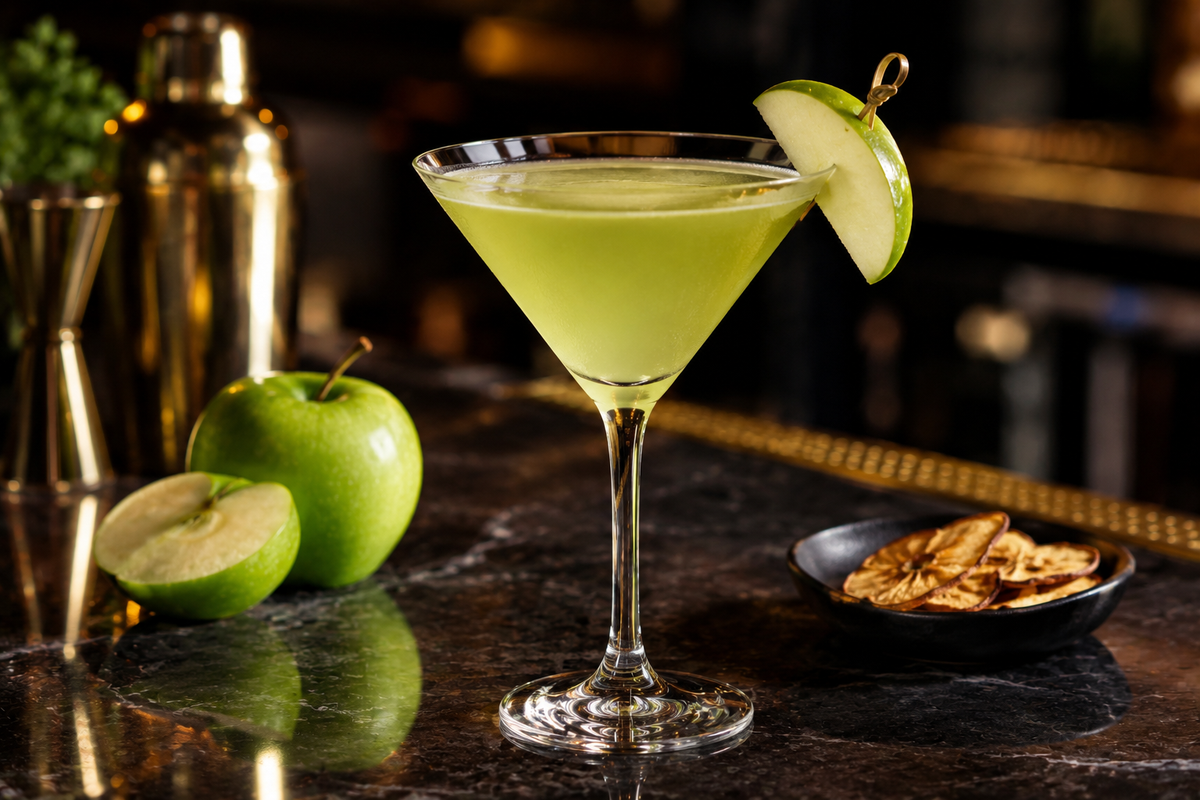
Fresh green apple slices are a natural choice, particularly when the drink uses Granny Smith apple or fresh apple juice. They reinforce the fruit flavor and provide a clear visual connection to the cocktail.
However, fresh apple requires preparation and can discolor after cutting. Bars serving a high volume of Appletinis should consider how much prep time the garnish requires and how consistently it can be presented throughout a shift.
Dehydrated apple offers another option. A dried slice can provide an apple-focused finish without requiring a fresh slice for every order. For a seasonal variation, dehydrated spiced apple slices are worth considering when their appearance and spice profile suit the recipe.
The garnish should support the drink, not dictate its ingredients. A spiced apple slice may work particularly well with a version that already includes warm spice, while a crisp, tart Appletini may call for a simpler apple garnish.
3. Make the Presentation Work for Your Bar
An Appletini is traditionally served in a chilled martini glass or coupe. Either can work, depending on the bar's glassware and the style of the drink.
A few details make a difference:
Keep the glass chilled. A cold serving glass helps the cocktail stay refreshing after shaking.
Avoid overcrowding the rim. One well-placed garnish is often enough. Too many decorative elements can make the drink harder to handle.
Consider the color. A bright green cocktail already has a strong visual identity. The garnish should complement that color rather than compete with it.
Use consistent portions. Similar garnish sizes and placements help drinks look consistent across different bartenders and shifts.
These decisions matter particularly for restaurant bars and hospitality venues where the same cocktail may be prepared by several team members.
4. Give the Appletini a Place on the Seasonal Menu
Apple naturally fits autumn menus, but the Appletini does not need to be restricted to fall. Its familiar name can work throughout the year, especially when the recipe is adjusted to suit the season.
For an autumn menu, bartenders might explore a version with fresh apple, lemon, and a restrained spice note. A lighter, more tart version can suit a year-round cocktail list.
The key is to give the drink a clear role. It might appeal to guests looking for a fruit-forward alternative to a traditional Martini, or provide a nostalgic option on a menu featuring updated classics.
Bars should also consider whether the ingredients can be used in other drinks. Shared ingredients can reduce waste and make seasonal menu changes easier to manage.
5. Keep Garnish Preparation Practical During Service
A garnish that looks good during a menu tasting still needs to work during a busy shift.
Fresh apple slices may need to be cut throughout service and handled to limit discoloration. Dehydrated apple slices can be portioned ahead of time, making them convenient when several drinks require a similar finish.
For either option, bar teams should establish a consistent routine:
-
Decide on the garnish and serving glass before the cocktail launches.
-
Set a standard garnish portion and placement.
-
Keep prepared garnishes accessible to the service team.
-
Store unused dehydrated fruit according to the supplier's instructions.
-
Review actual usage before adjusting stock levels.
A simple, repeatable setup is usually more useful than an elaborate garnish that slows down drink preparation.
Bringing the Appletini Into Today's Cocktail Menu
The Appletini's renewed attention gives bars a chance to revisit a familiar drink with a more considered approach. A balanced apple flavor, appropriate glassware, and a well-chosen garnish can make the cocktail feel relevant without losing its recognizable character.
Start with the flavor profile that suits your guests, choose a garnish that complements the recipe, and make sure the presentation is practical for everyday service. That way, the Appletini can earn its place on the menu through the drink itself, not just nostalgia.